Tuesday, 9 July 2013

High Summer


It is a July summer evening, the scent of the lime comes and goes, wafting in through the open window. I have noticed previously - despite my perennial hay fever - that the relatively still evening is the best time to catch the lime’s fragrance; or on a still damp and mild summer day when the scent hangs heavy around the clustered flowerets. Bees are instantly attracted to this tree when it is in bloom during the daylight hours. I had further wondered about midsummer river rituals in Britain, which are conspicuous by their absence, given their continental counterparts.


The River Cam is a Celtic place name and ‘cam’ means bend or curve, a descriptive name for a meandering watercourse. The Cam has thus given its name to Cambridge but there was an earlier Brythonic name for this river the Granta, however what this name meant is unknown. The Granta has given its name to Grantchester and Grantchester Meadows. Beside the river there exists a large common, the Cam defines one of its longest edges, and this prodigious patch of green is called Midsummer Common, and so again we find a reference to midsummer associated with a body of water. Upon this river bank green, the Cambridge Midsummer Fair is held, one of the oldest fairs in the United Kingdom [1].

The fair was granted a charter by King John in 1211, and was originally held on or near the feast of one St Etheldreda, however the saint’s feast day is 23rd June and so in effect marks the summer solstice, just like that of St John the Baptist. Revenue raised by the fair went towards the upkeep of Barnwell Priory and the monks, who were situated on the edge of Midsummer Common. Earlier still, the monks had resided at approximately the site of the modern St Giles Church in Cambridge’s Castle Street, over half a mile away, yet St Giles Church is still only 200 yards from the Cam which passes close by. This is a point of interest because it is reported that the monks wanted to move to the other side of Midsummer Common because they had no fresh water to drink at the Castle Street site.


Concerning the priory, there is local place name etymology for Barnwell as ‘bairns’ well’ where children played, but this looks like a rationalisation of earlier activity at a well which existed here. It is stated that a holy well “dating back to pagan times” [2], had a wooden oratory constructed at it, by an anchorite. The oratory was dedicated to St. Andrew, whose symbol is the saltire cross, and in the following context I would read this symbol as a solar cross. It is also recorded that “once a year on St John Baptist's Eve, boys and lads met there, and amused themselves in the English fashion with wrestling matches and other games and applauded each other in singing songs and playing musical instruments” [3] which explains the ‘bairns’ well’ name, although this seems to be an attempt to disguise the possibility that, as we have seen in other parts of the British Isles, St John’s feast day was actually a Christianised summer solstice observance, and the crowds which gathered at the holy well - which was itself only about 170 yards from the River Cam - were also there for the water rituals associated with midsummer. It seems that the Church not only absorbed the pagan holy well, it built an edifice there where the local population had once gathered on midsummer evening.


High summer was still marked every year on Midsummer Common by the annual fair, a summer fair held on the bank of a river. That midsummer river rituals were known beyond continental Europe is testified by accounts from Ireland. At sunset on St. John's Eve in West Limerick an ancient fire festival was observed. The fire was begun exactly at sunset and was watched over until after midnight and carefully tended. People gathered around the fire with dance, music and games including ‘feats of strength’ which exactly parallels the wrestling games recorded for the holy well at Barnwell before the priory was built there [4]. Then “unless the weather proved too cold, summer swimming in the river began on St. John's Day and the observance of the festival was supposed to eliminate all danger of drowning.”
I would take that as circumstantial evidence that river rituals during the summer season, which began regionally on May 1st and continued up to the longest day of the year - the summer solstice - and beyond, were known in Britain and Ireland and are today represented by dew lore at this time of the year, and probably other water rituals, and also some holy well customs now associated with Christianity. A major ritual focus at Stonehenge, apart from the megalithic circle and the sunrise, was the river, the Avon [Welsh ‘afon’] which linked Stonehenge - and by a processional avenue - to the lesser known Woodhenge circle near Amesbury.

References

1. The Stourbridge Fair was also held on the banks of the Cam, further along the river. The fair was held on Holy Cross Day, September 14th, approximately one week before the autumn equinox. Holy Cross Day references Saint Helena whom I elsewhere argue for identification with Elen Luyddog. Elen appears in the Mabinogion, a collection of stories from medieval Wales, and if Elen was an earlier solar divinity, as I believe she was, then the cruciform associated with Saint Helena - just like St Andrew's saltire - might also carry the symbolism of the solar cross.


Thursday, 4 July 2013

The Midsummer Tree


The Tree of Midsummer

It is early July and the limes have had green and yellow bursting buds for several days now, and the elusive sweet scent of the lime is on the breeze. The lime is one of the last trees to flower, and the flowering always occurs over the midsummer period. Probably for this reason the lime is one of the trees associated with the sun goddess Saule in the Baltic where midsummer has retained its pagan celebrations alongside the Christian feast day of St John the Baptist, which coincides with the summer solstice.


Pagan summer rituals included bathing in water, frequently rivers, and so the identification of St John with this time of year has merged Christian and pagan observance side by side. In Britain, we have summer celebrations, and the feast day of St John the Baptist is an aspect of Church devotion, but you’d hardly notice that, it doesn’t stand out particularly from any other feast day today, and it is practically diaphanous compared to Easter (vernal equinox) and Christmas (winter solstice) which fall on approximately significant dates in a pre-Christian context.
 
The water aspect of summer extends back into the spring called ‘Whitsuntide’ by the Church, and we know that water is referenced here - and interestingly without mention of St John the Baptist - because white was the colour traditionally worn on the occasion of baptism, and so Whit Sunday often followed by Whit Monday and other days during this week in spring. 1


But where are the great pagan water festivals which pre-dated the Church holy days? We have already detected a general significance for dew over the summer period, but mention of pagan river rites is difficult to find, perhaps unsurprisingly so - the Church did not go to all the trouble of installing its baptismal saint at the summer solstice only to see earlier customs survive. And so I wondered, if the actual customs have perished, is anything to be gleaned from place names?
 
An obvious candidate is the river at the town of Midsomer Norton in Somerset; and you will also find obvious attempts to rationalise away references to anything genuinely pagan here and elsewhere. Midsomer Norton stands on the River Somer or ‘summer river’ and the village name is suggested by some to be in remembrance of the St John the Baptist ‘summerings’ or festive occasions which occurred at this time. If so, it is curious that the saint’s name is absent from the village here. Critics will argue that the earlier names recorded for the village were Norton Friars and Norton Canonicorum, but since these are ecclesiastical references you can hardly expect anything with heathen connotations to prevail.
 
I would certainly see the Somer at Midsomer Norton as a potential midsummer river recalling pre-Christian water celebrations on a par with Kupala Night in continental Europe, and I rather think the summer aspect of the river Somer gradually reasserted itself into the medieval period, folk custom being such a very conservative phenomenon. Pagan rejoicings known as ‘summerings’ were alive and well during the Middle Ages even though they were given a new Church identity; the originally pagan nature of these glad times reveals itself from the disapproving writings of contemporary Puritans which ironically identify the equivalent of pagan midsummer eve rites in the British Isles for posterity.


Meanwhile, in Wales there are some further revealing river names. In North Wales the River Alwen today accompanies the A5, a major road into Wales from England. The name Alwen is significant because it possibly recalls the name of a river deity, either Alaunos (male) or Alauna (female) and Alauna may be an earlier name for Elen, as much as Elen in Middle Welsh means ‘elain’ young deer or doe. But into this river flow numerous tributaries, and one of them has solar associations. This is Nant Heulog (sunny river) near Corwen. Further along the Alwen occurs the place name Ffridd Brynhelen, ‘fridd’ meaning pasture and ‘bryn’ meaning a hill. The significance of Helen’s Hill here is opaque but its location on the Alwen or possibly the Elen river cannot be ignored. The incidence of the ‘sun’ tributary to this river in the context of Elen being a sun goddess [see www.the-marian-cipher.com] is I feel rather compelling. Was the Alwen or its sunny tributary being resorted to by the local population for pre-Christian summer festivals?


That midsummer was indeed marked as a time for water ritual is further suggested by some holy well research. In an article entitled ‘Visiting the wells at Midsummer – a lost holy well custom’, the author has identified at least three midsummer well water immersions, an ‘eye well’ - eyes being synonymous with the sun - ritual well perambulations; as well as bonfires, music and dancing at this time which recall the celebratory nature of the historical pagan midsummer  festivals documented across much of Europe.


So it looks as if, in Britain, pagan midsummer river rites - if they existed - had been entirely suppressed by the time documentary evidence for folk customs started to appear in the early Middle Ages. The watery aspect of midsummer lived on at a popular level in dew lore, and also well rituals which had become Christian holy wells by this time. Rivers are such a focus within the landscape, especially before the introduction of motorised forms of transport, that their ritual neutralisation may I think have been a Church priority, whereas the comparatively innocuous dew traditions might have gone unnoticed; bearing in mind that probably all rivers were seen as numinous in pre-Christian Britain: the River Alwen may be a good example, the rivers Dee at Chester and in Aberdeenshire are certainly so, retaining their sense of ‘The Goddess’ to this day.


1. Ronald Hutton, ‘The Stations of the Sun’, 1996, page 277: “Whit Sunday or Whitsun ... most likely explanation is that the festival was a notable time for baptisms, and white was the customary colour of baptismal robes”.


Tuesday, 25 June 2013

Litha: some thoughts


The lime tree by my window has not yet flowered, with its sweet if fugitive scent. It is June 25th and we have had a long grey winter and a cold, damp summer - so far - due to the vagaries of the Jet Stream. Last year my lime flowered on midsummer evening, the summer solstice. I was going to say ‘the ancient festival of’ but I cannot - there is no documented proof that the summer solstice was ever celebrated in England in the remote past, that is to say, concerning the most part of Britain where the English language is today spoken.


However, my blog is in the form of a journey, an exploration into the past, and so - hold tight -  backwards in time we go. I look for patterns in belief and the patterns I am seeing do strongly suggest that the documented pre-Christian midsummer festivals across continental Europe were in fact reciprocated on this side of the briny divide; bit of a problem though, because the first historian of the English, 8th century Bede, effectively says ‘no’ by ignoring them, if they did exist; and also remembering that the insularisation of the British Isles was a fairly recent phenomenon in terms of geological time: the land mass now named ‘Doggerland’ which linked us to northern Europe was only completely inundated by the North Sea some 8000 years ago.

So what patterns am I seeing? I think summer can be celebrated from springtime, the dawn of summer - until midsummer - and beyond that is the agrarian harvest, with its own rituals. This means I am looking at May [Beltaine] to July for summer festivals in Britain and not just the period of the solstice. I have found traces or suggestions of the Baltic midsummer festival ‘Ligo’ in the name of the lime tree because both words trace back to a common sense of ‘pliable’ or ‘lithe’ which is the self-same meaning for the Anglo-Saxon season of Litha, recorded by Bede as a name for midsummer, but that is all he tells us.

Well, we have our tree, the lime, once abundant in the British Isles but it is a curious fact that since Britain was cut adrift from continental Europe the lime has stopped propagating itself over here. It follows that it is a dwindling tree in Britain, if still quite a popular one, judging by our streets and park spaces. Perhaps the second favourite tree (there were several) of the Baltic sun goddess Saule (‘sun’) was the birch, and the birch carried on as before, unfazed by the depredations of the North Sea, it figures quite prominently in British midsummer festivals from when they are documented, from about the Middle Ages onward -

“The impulse to celebrate the arrival of summer in Europe’s northlands, by bringing home blooms and leaves, is probably ageless ... birch was the favoured tree in Wales ... the maypole ... a tall birch tree, around which festivity took place”

pp 230, 233, Ronald Hutton, ‘The Stations of the Sun’, 1996.


Latvian Daina [song number 235].

The three leaved birch
At the edge of the highway;
This is where Saule suspended her girdle,
And Saule’s  daughter, her crown.

[translation RK]
However, a crucial aspect of the summer rites (including spring time) was ritual bathing - which explains the St John the Baptist reference for midsummer - a somewhat neglected Christian feast day in the UK today.

Across Eurasia, the summer bathing tradition of Kupala Night "predates Christianity. Due to the popularity of the pagan celebration ...it was simply accepted and re-established as one of the native Christian traditions intertwined with local folklore.

 "The Ukrainian, Belarusian and Russian name of this holiday combines "Ivan" (John — the Baptist) and Kupala which is related to a word derived from the Slavic word for bathing, which is cognate. The latter is reinterpreted as John's baptizing people through full immersion in water (therefore his biblical title of the Baptist)"


But Kupala is a goddess - she is an incarnation of the summer goddess - in England that would be 'Queen of the May' a tradition itself absorbed I believe by the Virgin Mary, the May 1 ‘Queen of Heaven’. Kupala's feast day, the solstice and her ritual bathing has been merged to the St John the Baptist observance.


Then where is Kupala’s ritual summer dip in the British Isles? To begin with there are some intriguing hints. “In Oxford, it is traditional for May Morning revellers to gather below the Great Tower of Magdalen College ... to listen to the college choir sing traditional madrigals ... then thought to be traditional for some people to jump off Magdalen Bridge into the River Cherwell”.

The antiquity of this custom is in doubt but the date and Marian reference is perhaps notable this being, as stated above, the date for the festival of the Queen of Heaven.
Riverine references are sparse though. On May 1 each year, one ‘Kettle Bridge Clogs’ morris dancing side dance over Barming or Kettle Bridge, which crosses the Medway river  near Maidstone, in order to mark the start of their morris dancing season; whilst in Knutsford, in Cheshire, there is a tradition of "sanding the streets" with coloured sand in patterns on May Day, since tradition has it that King Cnut, fording the River Lily, threw sand from his shoes into the path of newly weds, wishing them as many children as grains of sand before them. This custom can be traced to at least the late seventeenth century and I would classify it as a thinly veiled fertility rite.

http://en.wikipedia.org/wiki/Knutsford#Culture_and_community

http://en.wikipedia.org/wiki/May_Day

But there’s not a great deal more; unless of course we take a closer look at the numerous references to dew over the summer season. I have found references to dew rituals from Ireland to Scotland to England which I first considered as an alternative to ritual summer bathing but it is much more than that. From the West Country there comes a springtide custom when “some girls would be up early to wash in the morning dew for it was said that bathing in May dew made a girl more beautiful” and similarly in Scotland on “the slopes of the hill facing Holyrood are where young girls in Edinburgh traditionally bathe their faces in the dew on May Day”. In Ireland, a Dr. Gerard Boate (1652) wrote of the virtues of May Day Dew, and otherwise it was believed that if a girl rose early on May Day and bathed her face in morning dew at sunrise she “will be beautiful” just like the English and Scottish examples above cited. And more to the point, just like the beautiful sun herself!


These folk customs have their exact counterpart in the Baltic, which had an ancient sun goddess and the longest living unbroken tradition of paganism in Europe, together with an immemorial observance of the summer solstice. The corresponding seasonal name of Old English Litha is Ligo in the Baltic and the two words basically mean the same thing, they must be cognate yet no linguist yet has come to that obvious conclusion. One wonders why? Ligo is also called Jani which is the predictable reference to ‘John’ as in the Christian saint; it is also “a night of ancient fertility rituals. Some people maintain an old Jaņi tradition of running naked through the morning dew to bathe themselves. The belief here is that he who bathes nude in the morning dew of Jani will have a year of beauty, endurance and strength”.
Another Baltic name for midsummer is Rasos [Rasa in Latvia] and this name specifically references dew. Around June 24th ‘Dew Holiday’ traditions include “singing songs and dancing until the sun sets, telling tales, searching to find the magic fern blossom at midnight [a euphemism], jumping over bonfires, greeting the rising midsummer sun and washing the face with a morning dew, young girls float flower wreaths on the water of river or lake. These are customs brought from pagan culture and beliefs”.
http://en.wikipedia.org/wiki/Saint_Jonas'_Festival


Lithuanian and Latvian are very ancient languages in the Baltic and it is fascinating to see how close the Baltic and subcontinent of India are with respect to Rasos. The corresponding word in Hindi is Rasa which denotes a religious festival also current, called Rasa Lila. In Sanskrit, the word 'rasa' means juice, nectar, emotion or sweetness and 'lila' means to be active. The Rasa Lila is actually a dance of love between the god Krishna and his consort Radha, it takes the form of a circle dance. It was a circle of dew which inspired the earliest building faze of the towering Mont St Michel in France. Looking at the words juice and nectar we can see a clear connection to dew in the sense of liquid, and in this religious sense - mystical liquid.


I will conclude then on the circumstantial evidence of the exact correspondence between ritual dew bathing (and gathering) in the Baltic and the British Isles, to argue that the midsummer solar ritual of the solstice, presided over by a sun goddess , [in the Baltic Saule, in Britain perhaps Sulis - the Bath goddess whose name means sun] - represent the same prehistoric tradition, effaced as Litha by Christianity in England but living on as Ligo in Latvia and Lithuania to this very day.

And when will we recover our pagan summer heritage?

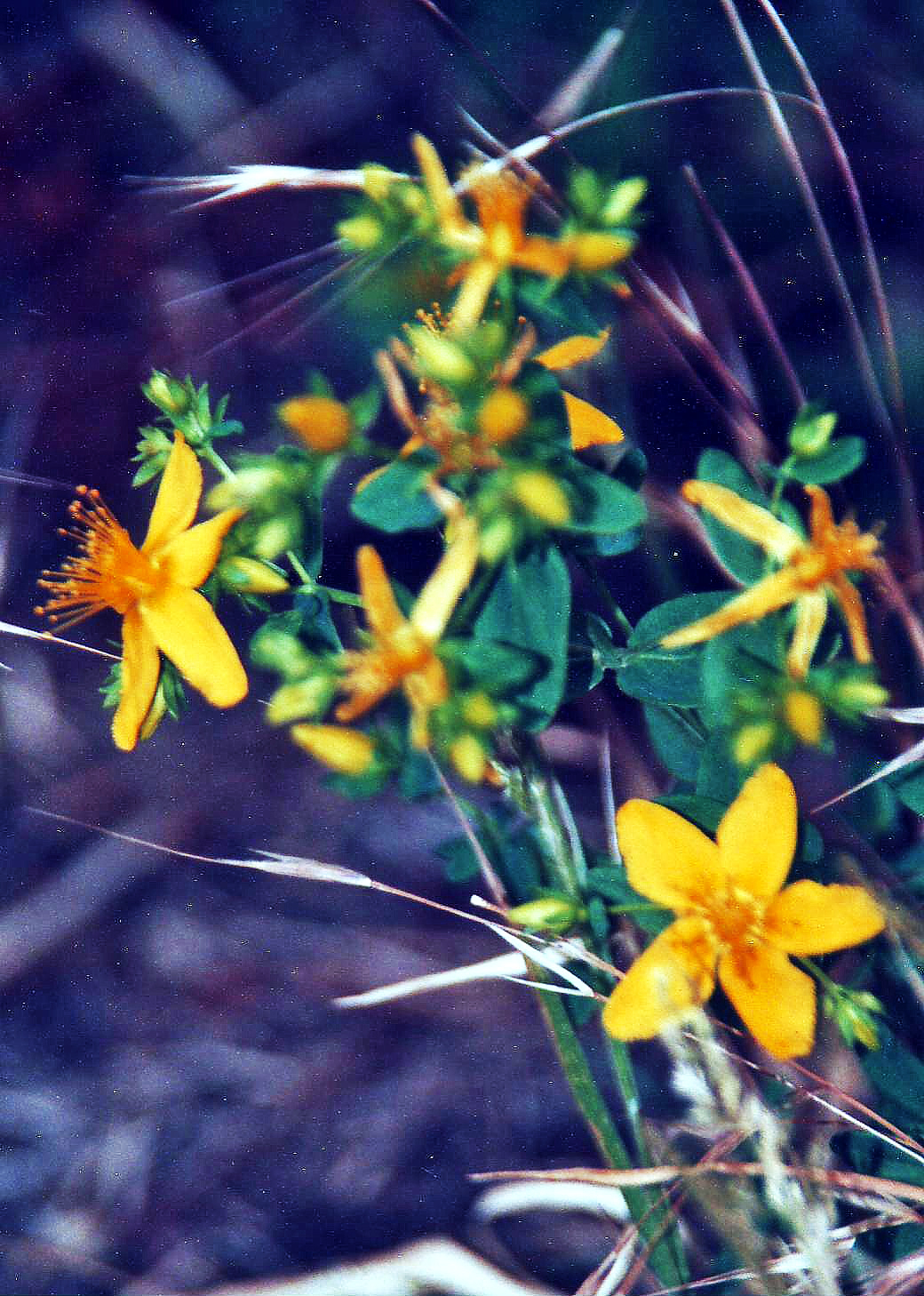
In English folklore, if a girl gathered St John’s Wort “on midsummer’s eve with the dew still on it, she would marry within a year”

Reference: p. 59, ‘Discovering the Folklore of Plants’, M Baker. Shire Publications, 1981.


Friday, 7 September 2012

A New eBook ~ The Marian Cipher: rediscovery of the Sun Goddess.


In his first book, Ric Kemp examines the evidence for the survival of a sun goddess archetype from earliest times down to the present day in pagan traditions, folklore, folk-Christianity and orthodox hagiography. Ric explores her ubiquitous presence in the ancient Middle East, Anatolia and Europe, and links her medieval cult to the mysterious daisy wheel circle – the Marian Cipher - which began appearing in churches from around the time of the Reformation onwards. Ric’s book takes us back through time beyond the Middle Ages into prehistory when small bands of hunter-gatherers traversed a primordial world, following herds of migratory reindeer across a post-glacial landscape, looking out nightly into the depths of space to trace their Mesolithic mythology in the ceaselessly revolving northern stars, charting the immemorial story of the loss of the sun goddess and her mythic return.

The full story is here:


Tuesday, 10 July 2012


Eostre:


Fact or fable?


This article is in response to the current debate on the enigma and origin of the name Easter.

I am wondering if Jacob Grimm in his 1835 'Deutsche Mythologie' [1], derived at least some inspiration for his reconstructed Ostara goddess from Bede's mention of Eostre in the 8th century Common Era? Grimm claimed that there were Old High German versions of the name Ostara yet a similar name was introduced for the month of April in the Germanic Frankish kingdom a millennium before Grimm, so these alleged OHG names could also be the result of cultural contacts over centuries? But returning to Bede, how much could he know about the folk traditions of ancient Britain having spent the greater part of his life, since the age of seven, in cloisters? One man writing in Northumbria cannot possibly have a firm grasp on what is happening the length of breadth of the British Isles; but in any case, was this Bede's intention in writing the 'Historia ecclesiastica gentis Anglorum', the first history of the English People?


Bede was a pioneer for the Roman Catholic faith which was poised and on the very brink of converting Britain to Roman Catholicism [despite the Celtic Church which was already established in Britain] therefore Bede's motives and words should be considered with this in mind. Francis Pryor [2] suggests that Bede actually invented the pagan Anglo-Saxon nation to give Rome a good excuse to convert it, and the rest was history according to Mr Pryor. Therefore I support the notion that Bede could be somewhat creative on occasion. The question remains though, where did Bede get the notion for the person of Eostre in the first place and is there anything at all to suggest he didn't just make her up?

It could be argued that a wayward people needing spiritual guidance would have notions of pagan gods and goddesses that they needed to be divested of, and there's your reason for inventing Eostre. But Bede specifically states that Eostre was no longer worshipped in his own day, so why mention her at all? [3]

The etymology for the word 'east' is Proto Indo-European so German as a language wasn't even being spoken when it was coined, let alone Old English. So if we are seriously looking for the source for Eostre, and also if this name represents an actual deity, we need to look back thousands of years before Bede's time from what I can discern.

There is though a genuine 'east' goddess but not the person of Grimm's nineteenth century reconstruction. The lady is called Ausrine and is thought of as the easterly rising Morning Star which the Romans called Venus and it presages the rising of the sun.

Baltic paganism is ancient indeed and resisted Christian conversion right up until the Middle Ages so a lot of genuinely pagan lore has survived in the Baltic which may have submerged beneath layers of subsequent cultural overlay elsewhere. The Baltic also had and has an actual sun goddess. I doubt very much if Bede knew much about the Baltic so we might ponder what an easterly oriented goddess perhaps associated with the spring and dawn is or was doing in Britain around the time of the 8th century CE?

During this very time Charlemagne, staunchly Christian king of the Germanic Franks renamed all the Frankish months and changed the name of the month of April to 'Ostarmoniath'. That may seem surprising to modern pagans, why would a Christian monarch go out of his way to rechristen a month name after a pagan goddess? The corollary may well be that there was no such Germanic pagan goddess and Charlemagne was merely using the term Easter as it is used in the Christian Church today, to denote a Christian festival because "there is no evidence outside of Bede for the existence of this [Eostre] Anglo-Saxon goddess. There is no equivalent goddess in the Norse Eddas or in ancient Germanic paganism from continental Europe" [4] and that includes Charlemagne and the Franks. But nevertheless, Bede picked up on this name and the 'east' aspect of it is parallelled in the Baltic (above) and it references a goddess, a documented deity. Ronald Hutton [5] thinks that Bede may have mistaken references to a spring goddess and that 'the month of opening' was the actual translation for Anglo-Saxon 'Eostremonath' but is it likely that Bede was so distanced form the tongue of 'his nation' (he calls the Anglo-Saxons this in his 'On the Reckoning of Time', c.730) that he was at a total loss to understand the meaning of the Anglo-Saxon verb 'to open'? I find that somewhat fantastic seeing that the Venerable Bede is celebrated with the writing of an ecclesiastical history of the Anglo-Saxons. But if no Old English or Saxon spring goddess existed to cause the name Eostre to be remembered in eastern Britain, where had Bede picked up on it, what else could explain her presence or her origin - if indeed such a goddess did exist at all?

Concerning spring in the British Isles there may be no evidence for pre-Christian spring festivals hard on the vernal equinox but there is some evidence to suggest that this time of the year was noted. Burl [6] gives at least two instances of equinoctial alignments, one at the Stipple Stones on Bodmin Moor and one at the Sanctuary circle at Avebury in Wiltshire, and also at Avebury there is an apparent equinoctial alignment for the South Circle within the greater henge there. Slightly further afield in Ireland we have Cairn T of Loughcrew unarguably aligned with the equinoctial sunrise, alignment of unknown significance but certainly of some profound significance to the people who both built and carefully decorated the cairn. So it does look as if something was being observed or perhaps someone was celebrated at the time of the equinox in pre-Christian Britain and Ireland?

References
2. Francis Pryor, 'Britain AD', 2004
4. Ronald Hutton, 'The Stations of the Sun', 2001
5. ibid.
6. Aubrey Burl, 'Stone Circles', 1995.

See also:
[accessed 11.07.2012]
[accessed 11.07.2012]

Tuesday, 17 August 2010

The Marian Cipher: Rediscovery of the Sun Goddess


A new book is in preparation which explores the many questions raised by this blog. Please watch this space.

Thank you.

RK

Friday, 13 November 2009

The Marian Cipher: an introduction

For some years now I have been touring parish churches in southern England and more recently North Wales, making notes on unusual carvings, figures and features I find there. Recently I noticed a strange circular, six petal ‘daisy wheel’ motif on a church font near Cranborne Chase. I had noticed a parallel pattern from a 7th century CE female burial near a hamlet 10 miles/16km northwest of Cranborne, on the edge of the downs and wondered if there could possibly be a link? Subsequently I encountered the ‘daisy wheel’ figure on a pillar in Salisbury Cathedral, along with ritual circles and cryptic lettering, which had also accompanied the inscribed circle near Cranborne. The Cranborne Chase extends across Dorset, Wiltshire and Hampshire and is steeped in pre-history, including the enigmatic Dorset Cursus, a 3000 year old, 1000 metre wide, processional corridor which extends northeast for some 6 miles, from Thickthorn Down to Bokerley Ditch near Pentridge, a Celtic place name.


The cryptic lettering – predominantly the letter ‘W’ has been interpreted by Timothy Easton [1] as a cipher or monogram composed of the letter ‘V’ and ‘M’ for Virgin Mary. There is additionally a documented ‘W’ monogram composed of ‘M’ and ‘A’ meaning Auspice Maria or ‘under the protection of Mary’ [2]. That the W’s and circles appear in proximity suggests a relation. The majority of dates accompanying the letters and circles begin after the onset of the Reformation in England from 1517, and extend into the eighteenth century.


The ‘daisy wheel’ is a predominantly solar symbol with a wide distribution throughout Europe. It was ultimately adopted by the early Church in a sometimes 6, sometimes 8 spoke form. It is a pre-Christian symbol in Russia; in the Baltic it is associated with the sun goddess Saule and appears with a goddess on the 1st century BCE Gundestrup Cauldron from Denmark. At Romano-Celtic Bath [Aquae Sulis] is documented a goddess called Sulis, whose name appears to be cognate or related to that of Saule and was almost certainly a sun goddess in her own right, on the evidence of the closeness of the words ‘sol’ [Latin, sun] and ‘suil’ [Gaelic, eye] to the name Sulis [3] . That the etymology for ‘daisy’ is ‘day’s eye’ illustrates the ongoing association with sun, eye, circle and flower.


Consequently, I have formed the theory that the female from the 7th century downs burial, associated with the ‘daisy wheel’ symbol was a late pagan priestess of the sun goddess. I further ponder whether the female solar attribution might not have passed onto the Virgin Mary during the period of conversion to Christianity, which was happening at this very time; and that the identification of Mary with the sun was not a local or regional phenomenon, since the ‘woman clothed with the sun’ reference from the Bible [4] was widely understood to refer to Mary. In fact, the spontaneous association of the sun with the Virgin Mary has been recorded in Portugal ‘Our Lady of Fatima’ in 1917 and as late as 1981 in the Balkan town of Medjugorje.


Could it be that the Reformation as it swept through Britain, removing thousands of images of Mary from religious buildings, sparked a folk-reaction resulting in Mary’s initials appearing secretly on walls and surfaces together with a cryptic circle, Marian sun cipher, known to folklorists today as the ‘daisy wheel’?


Notes.

1. see http://www.apotropaios.co.uk/ritual_marks.htm [accessed 12.11.09]
2. http://symboldictionary.net/?p=2255 [accessed 12.11.09]
3. MacKillop, Celtic Mythology, p393, 1998
4. Revelation 12:1

I am indebted to Brian Hoggard for identifying the folk name ‘daisy wheel’ for me.

Photographs: http://www.flickr.com/photos/74752096@N00/sets/72157622754659518/

..................................................................................................................................................................


Daisy Wheel, ritual circle and cryptic ‘W’ in Salisbury Cathedral, the ‘Cathedral Church of the Virgin Mary’, begun 1220 CE. The circles measure approximately 1”/2.5cm across.